

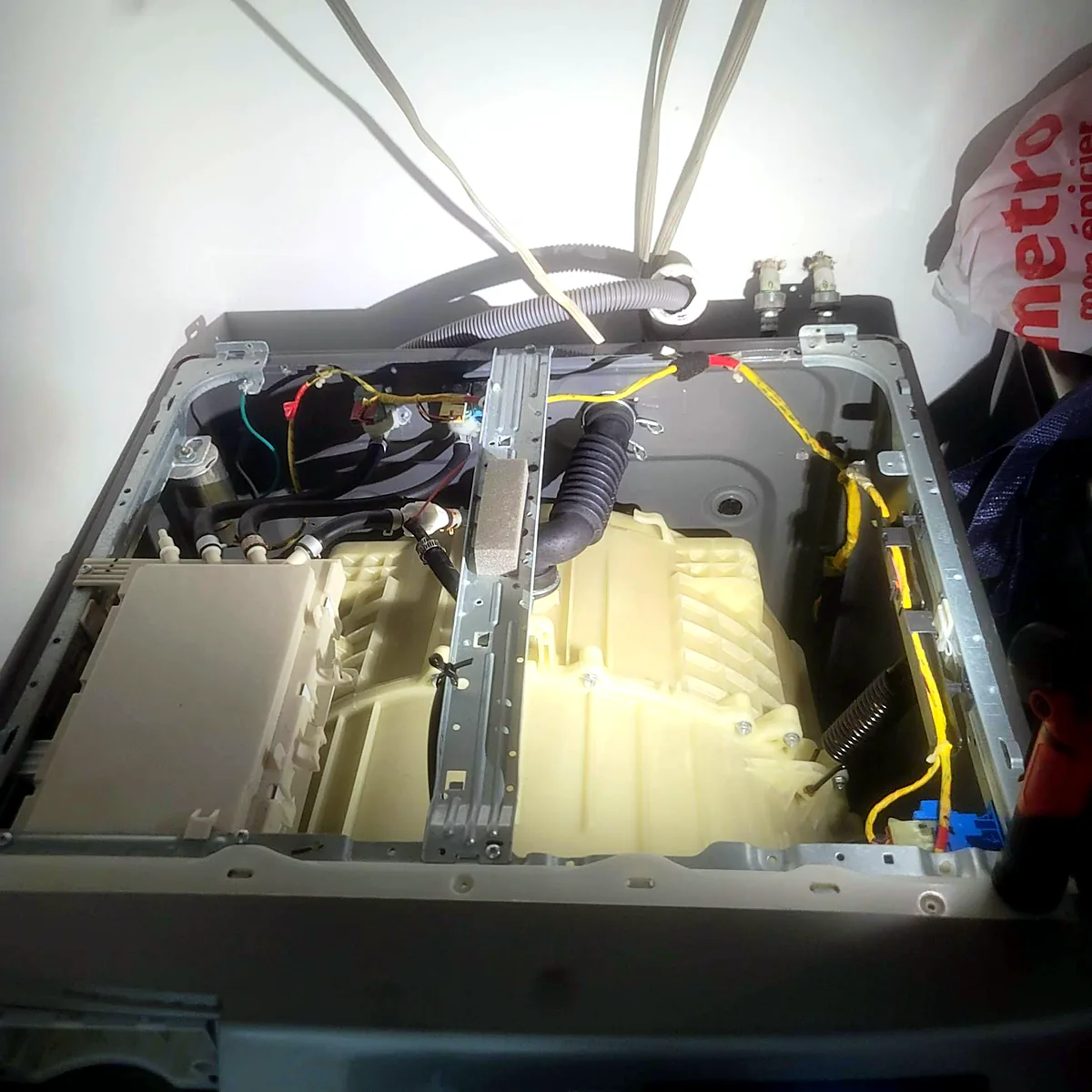
A washing machine full of water at the end of a cycle is frustrating, but the cause is often simple. A sock in the pump filter, a kinked drain hose, or too much detergent can stop a washer from draining. This guide explains the most common causes, how to safely drain and check your washer, and when it is time to book a washing machine repair.
Quick Answer: Why Won’t My Washer Drain?
- A clogged pump filter (front-load washers)
- A kinked, crushed, or clogged drain hose
- A blocked standpipe or laundry sink drain
- Too many suds from the wrong detergent
- Something stuck in the drain pump
- A failed drain pump
- A faulty lid switch, door lock, or control board
Safety First
- Unplug the washer before checking the filter, pump, or hose.
- Have towels, a shallow pan, and a bucket ready. A full drum can hold a lot of water.
- If you just ran a hot cycle, wait for the water to cool before draining it.
1. Clean the Pump Filter (Front-Load Washers)
Most front-load washers have a pump filter behind a small door at the bottom front of the machine. It catches coins, hair ties, buttons, and small socks before they reach the pump. When it clogs, the washer can’t drain.
- Open the small access door at the bottom front.
- Many models have a thin drain tube next to the filter. Pull it out, remove its cap, and let the water drain into a pan. Empty the pan as it fills.
- When the flow stops, slowly unscrew the filter counter-clockwise. More water will come out, so keep towels ready.
- Remove everything caught in the filter and rinse it.
- Look into the opening and remove anything else you can see, then screw the filter back in firmly.
Most top-load washers don’t have a filter you can reach, so the checks below matter more for them.
2. Check the Drain Hose
The drain hose runs from the back of the washer to a standpipe or laundry sink.
- Pull the washer out carefully and look for kinks or a hose crushed against the wall.
- Check that the hose isn’t pushed too far down the standpipe; it should only go in a few inches.
- Remove the hose from the standpipe (over a bucket) and check it for lint or debris.
3. Check the Standpipe or Laundry Sink
If the drain in the wall or the laundry sink is clogged with lint, the washer pumps water out but it comes right back or overflows. Pour a bucket of water into the standpipe. If it backs up, the clog is in the house plumbing, and a plumber is the right call.
4. Too Many Suds
High-efficiency (HE) washers need HE detergent in small amounts. Regular detergent, or too much HE detergent, creates thick suds that can stop the washer from draining and spinning. If you see foam in the drum, run a rinse-only cycle with no detergent, then use less next time.
5. Something Stuck in the Drain Pump
If you hear the washer humming during the drain cycle but little water leaves, a small item may be blocking the pump impeller. On front-loaders, cleaning the pump filter often frees it. On top-loaders, the pump is reached from the back or bottom of the machine, a job best left to a technician.
6. A Failed Drain Pump
Drain pumps wear out, especially after a few years of heavy use. Signs include a loud hum or grinding during draining, no pump sound at all, or very slow draining even with a clean filter and hose. A technician tests the pump and the power reaching it before replacing anything.
7. Lid Switch, Door Lock, or Control Board
On many washers, the drain and spin cycles won’t run if the machine doesn’t detect that the lid or door is safely closed. A broken lid switch, a faulty door lock, or a control board problem can leave the drum full of water. These parts need testing with a meter.
Common Drain Error Codes
- LG: OE (drain error)
- Samsung: 5C, 5E, or nd (drain error, depending on the model)
- Whirlpool front-load: F9 E1 (long drain time)
Write the code down before you reset the washer. It speeds up the diagnosis. See also our Samsung and LG appliance repair pages.
When to Call a Technician
- The filter, hose, and standpipe are clear but the washer still won’t drain
- You hear humming, grinding, or nothing at all during the drain cycle
- The washer also won’t spin (see washing machine not spinning)
- Water is leaking onto the floor (see washer leaking)
- A drain error code keeps coming back
How to Prevent Drain Problems
- Empty pockets before washing.
- Wash small items like socks and baby clothes in a mesh laundry bag.
- Clean the front-load pump filter every one to three months.
- Use HE detergent in the right amount.
- Keep the drain hose straight and the standpipe free of lint.
Washing Machine Repair in Thornhill, Vaughan and Toronto
If your washer still won’t drain, Speedy Appliance Repair can help. We have repaired washing machines across Thornhill, Vaughan, Richmond Hill, North York, and Toronto since 2011, with same-day visits. When the part is in our van, the repair is usually finished the same day or the next day.
- Open 24/7, including evenings and weekends
- Free service call when you go ahead with the repair
- Genuine manufacturer parts and a 90-day parts and labour warranty
- Insured technicians who wear shoe covers and leave your laundry room clean
Book a washer repair or call (416) 900-3677.
Frequently Asked Questions
How do I get water out of a washer that won’t drain?
On a front-loader, use the small drain tube next to the pump filter at the bottom front and drain the water into a shallow pan. On a top-loader, scoop the water out with a bucket, or lower the drain hose into a bucket on the floor.
Can I reset my washer to make it drain?
Unplugging the washer for a minute can clear a temporary control fault. If the cause is a clog or a failed pump, the problem will come back.
Why does my washer drain but leave clothes soaking wet?
The washer may be draining slowly and skipping the final spin, or the load may be unbalanced. Clean the pump filter and try a smaller, evenly spread load.
Is a drain pump worth replacing?
In most cases, yes. A drain pump is a common repair and costs far less than a new washer.
1 comment on “Washing Machine Not Draining? Causes and Fixes That Work”